Why Listening First Helps With Pronunciation
It’s helpful to hear words before you read them. When you rely on reading first, you may “listen with your eyes” and pronounce words using the habits of your native accent. Many academic English words come from Latin, and in languages like Spanish or Italian, Latin-based vowels have fixed sounds that don’t change. English is different—vowel sounds shift depending on word length and stress. Longer words tend to have weak and strong syllables, which affects pronunciation.
Here is the perfect example:
Listen.
I’ve marked the stressed vowel sounds.
| Verb | Noun Form | Noun Person Form | Adjective |
| Analyse | Analysis | Analyst | Analytical |
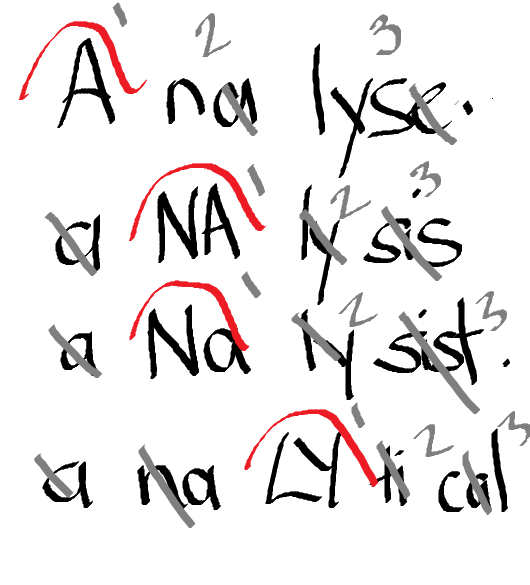
Notice the stress/stressed/clear vowels is the third from the end.
all the other syllables are weak, sound like an ‘er’ or grunt
Now listen again in a North American accent.
And now a British accent.
Write from dictation.

Vocab list: forensic, cellular behaviour, protein
1.
2.
3.
4.
5.
6.
Tips: know common collocations will help throughout the test but especially in the reading gap fill. Take note of collocation when you hear them. ie.
‘detailed analysis’
‘analytical and problem-solving skills’
analytical skills (often go with problem -solving skills).
*** analysis (singular) analyses (plural noun)- be careful between the verb and the plural noun in the read aloud section.



 IELTS & PTE TUTORING & COSULTANCY